
Fraud, Disinformation, and Money Laundering
The sordid story of the US Treasury, Latvia, Lithuania, Ukraine, and the EBRD

Editor’s Note: This is a series of guest articles by John Christmas, exiled whistleblower against Parex Bank of Latvia, co-author of the award-winning “KGB Banker” novel, and co-producer of the award-winning “Bankers Game” documentary. The corruption and illicit financial activity involved in this sordid story are massive in scope. I can only hope that some with authority and integrity will investigate and take action, as we continue to shed light on this story!
Author’s Note: It’s a privilege for me to submit this article to “‘Into the Void.” Thank you for providing an open forum to discuss a major fraud, disinformation, and money-laundering racket. This racket, about which I learned in 2009 and which continues today, should be of interest to all current and former US Treasury employees since a main target for the disinformation is the US Treasury. I have done many articles and interviews for other blogs and media while the mainstream media keeps silent.
You can watch “Bankers Game” below.
The EBRD and its questionable practices
At the center of the racket is the European Bank for Reconstruction and Development (EBRD), which is located in the United Kingdom where it has immunity from law. The EBRD is capitalized by 77 countries including the United States. The EBRD is supposed to be helping 35 developing countries including the post-Communist countries of Eastern Europe and Central Asia and some countries in Africa and the Middle East.
EBRD policy toward my whistleblowing has never been to address the evidence I provided, but instead to ignore the evidence and refuse communication.
There has been discussion over the past year about the US Agency for International Development (USAID). The agency ran development projects in developing countries, and Elon Musk’s DOGE team last year identified USAID as an unnecessary expense. USAID was dissolved, and its functions have been largely absorbed by the State Department.
If we’re talking “unnecessary expense,” the EBRD should also have been targeted by these “efficiency” gurus. The EBRD is supposed to be doing the same types of development projects in the same developing countries. Surely this also costs money.
Why did DOGE decide to cut funding to USAID but not to the EBRD?
Probably because the EBRD isn’t in the budget. The EBRD funds itself by selling tens of billions of dollars, pounds, and euros of bonds every year, so its expenses aren’t directly paid by governments. These bonds get triple-A ratings and are often sold to ESG investors who think the EBRD is making the world better. The ratings agencies write in their reports that the reason for the high ratings is because the countries owning EBRD shares will pay back these bonds even though they have no obligation to do so.
Are you getting worried yet?
The EBRD claims to make consistent big profits while investing in dangerous countries. These countries are run by oligarchs bribing corrupt politicians or by outright dictators. These countries don’t have “rule-of-law” and routinely imprison people for political reasons. Some of these countries are currently at war, even against each other. Profitable investing in such countries might seem difficult. But somehow the EBRD manages to do it, earning 100%+ returns from investments in companies even when those companies collapse from looting.
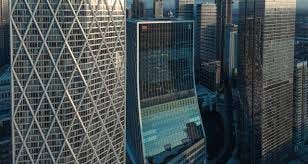
Also, the EBRD has no spending discipline. Commercial banks around the world need keep their operations lean to maintain profitability. Not so at the EBRD, which employs 3,000 people at its luxurious Canary Wharf tower. The EBRD also pays out generous consulting fees and donations to many influential people and organizations.
How can the EBRD invest in the most dangerous countries and have no spending controls and still make big profits? Is this a magic trick, somehow rescuing the poor people of the world and nobody needs to pay?
I had the misfortune to learn how the EBRD gets its profits from my experience as whistleblower when many assets of Parex Bank of Latvia disappeared between 2004 and 2009. I’m a citizen of Latvia forced to live in exile because I get threats on a regular basis. Latvian authorities refuse to investigate anything, including the fraud and threats, and refuse to even admit that anyone blew the whistle on this illegal activity.
Parex Bank
Parex is the EBRD fraud example I’m going to discuss because I know the details. In addition, I’ll explain how Parex activity moved to Ukio Lithuania, ABLV Latvia, Citadele Latvia, and Danske Estonia, which you may recognize as a major money-laundering system for the Putin regime.
The EBRD still supports Citadele Bank now in 2026. Citadele’s staff, clients, and assets mostly came from Parex and ABLV.
Parex was mostly owned by two Latvian oligarchs, Valery Kargin and Viktor Krasovitsky, until 2008. The majority of deposits at Parex were US dollar-denominated and held by shell companies.
According to the Spanish prosecution of Vladimir Putin’s Tambovskaya Mafia in 2015, Parex was the main money launderer providing platform (co-mingling) accounts used by both of the named Tambovskaya launderers. As I detailed in my whistleblowing, Parex was making undisclosed related-party loans to the two main oligarch owners and their family members.
Parex was also making fraudulent loans to two Russian oligarchs. Those two Russians were later named on the US Treasury’s Putin Warning List of 2018 (provided to Congress pursuant to the Countering America’s Adversaries Through Sanctions Act requirements by the Treasury Department).
In addition, after my whistleblowing effort began in 2004 and before the EBRD deal was signed in 2009, two more villains got involved. Parex made a large unrecoverable loan to a Russian-Latvian individual who was connected with the Tambovskaya mafia, according to the Spanish prosecution, and Parex made a large unrecoverable loan to Eduard Khudainatov who was named in 2022 by the FBI as the straw owner of three superyachts that the FBI seized because the true owners were Putin and his friends Igor Sechin and Suleiman Kerimov.
Latvia nationalized Parex in 2008 and blamed the United States for the need to nationalize the bank because Treasury officials were concerned that Parex was used for money laundering by Russian clients and pressured the bank to clean up its act. At the same time, Latvia claimed the Parex assets were good.
Latvia sold a stake in Parex to the EBRD in 2009, and some politicians started blaming Sweden instead of the United States. Latvian government announcements were inconsistent with politicians sometimes saying there were no losses and Parex assets were good then sometimes implying the assets weren’t good while blaming the United States or Sweden.
In 2009, Latvia and the EBRD both announced that Latvia sold a stake in Parex to the EBRD for 80 million euros because the stake was allegedly “valuable.” I offered details about the fraud I saw, however the EBRD declined my offer. The EBRD was supposed to be conducting due diligence, but it simply ignored the information relevant to the due diligence process.
Then in 2010, a report by consultant Nomura was leaked briefly in the media. The report indicated that Parex was deeply insolvent. That’s why the EBRD didn’t care about fraud, because they knew Parex was insolvent and bought it anyway. The business plan, according to Nomura, was to slowly write-off assets which were already known to be worthless over a five-year period, and then for the Latvian government to pay to the EBRD to reverse the investment. Information from various sources indicates that either the EBRD paid 80 million euros to Latvia which paid 190 million back, or some information can be construed to imply that the EBRD paid nothing to Latvia and Latvia paid 110 million back, which is the net amount. Either way, the purpose was to make it appear that Parex was not looted even though it was.
The Nomura report was marked as a “state secret” and the journalist who leaked the report was briefly arrested and forced to take down his website. The Putin-connected oligarchs who received fraudulent loans from Parex walked free and kept the money while Latvians lost the money, and the United States and Sweden were blamed.
The whistleblower—me—was left in exile with my career terminated because my whistleblowing was supposedly “fake” even though it was exactly accurate.
In the next article in the series, we will look closer at the corruption and fraud that occurred in Latvia that John continues to highlight.