
Greenland: National Security Implications
But not the way you think

I’ve been writing about Russia for a long time. Whether for work or on this site, I’ve been focusing on Russia and the national security issues surrounding it for more than 15 years.
The main thing we need to remember is that Russia after the fall of the USSR never stopped considering NATO (and the United States as its leader) as its main national security threat.
In late 2015, Putin signed a 40-page national security document (link is to the original Russian) that expressly named NATO as a threat to Russia’s national security. (Paragraph 15, p.5-6)
This is a load of hot excrement. NATO has never been a threat to Russia, other than as a hedge against its aggression and expansionism. That’s why former Soviet Republics wanted to join the alliance. That’s why Finland and Sweden both joined NATO after Russia’s full-scale invasion of Ukraine. Let’s also remember that NATO decided to bolster its capabilities in response to Russian revanchism and efforts to gain back the territories it lost after the fall of the Soviet Union.
Russia has been engaging in significant active measures to promote the break-up of the alliance - or at least to weaken significantly weaken the organization. From disinformation to fomenting discord among NATO members, Russia’s goals are ambitious - undermining and the ultimate destruction of the NATO alliance.
Russia is not afraid of NATO, as noted in numerous research. Putin certainly didn’t care about NATO’s last significant expansion that included the Baltic States. He outright said in a 2001 interview with NPR (yes, this is public on the Kremlin’s website), “We cannot forbid people to make certain choices if they want to increase the security of their nations in a particular way.”
There’s no fear there. But there is a desire to reimpose Russia’s influence in its near abroad. Since Moscow has decided that NATO remains its biggest national security threat, the Kremlin’s efforts to undermine NATO unity have increased during the past years. The Center for Strategic and International Studies last year issued a brief detailing the significant increase in Russian hybrid attacks against NATO allies.
Russia is engaged in an aggressive campaign of subversion and sabotage against European and U.S. targets, which complement Russia’s brutal conventional war in Ukraine. The number of Russian attacks in Europe nearly tripled between 2023 and 2024, after quadrupling between 2022 and 2023. Russia’s military intelligence service, the Main Directorate of the General Staff of the Armed Forces of the Russian Federation (or GRU), was likely responsible for many of these attacks, either directly by their own officers or indirectly through recruited agents. The GRU and other Russian intelligence agencies frequently recruited local assets to plan and execute sabotage and subversion missions. Other operations relied on Russia’s “shadow fleet,” commercial ships used to circumvent Western sanctions, for undersea attacks.
Enter Greenland
There’s no doubt that US President Donald Trump wants Greenland. He wants the island so badly, he’s willing to wage an economic war over it.
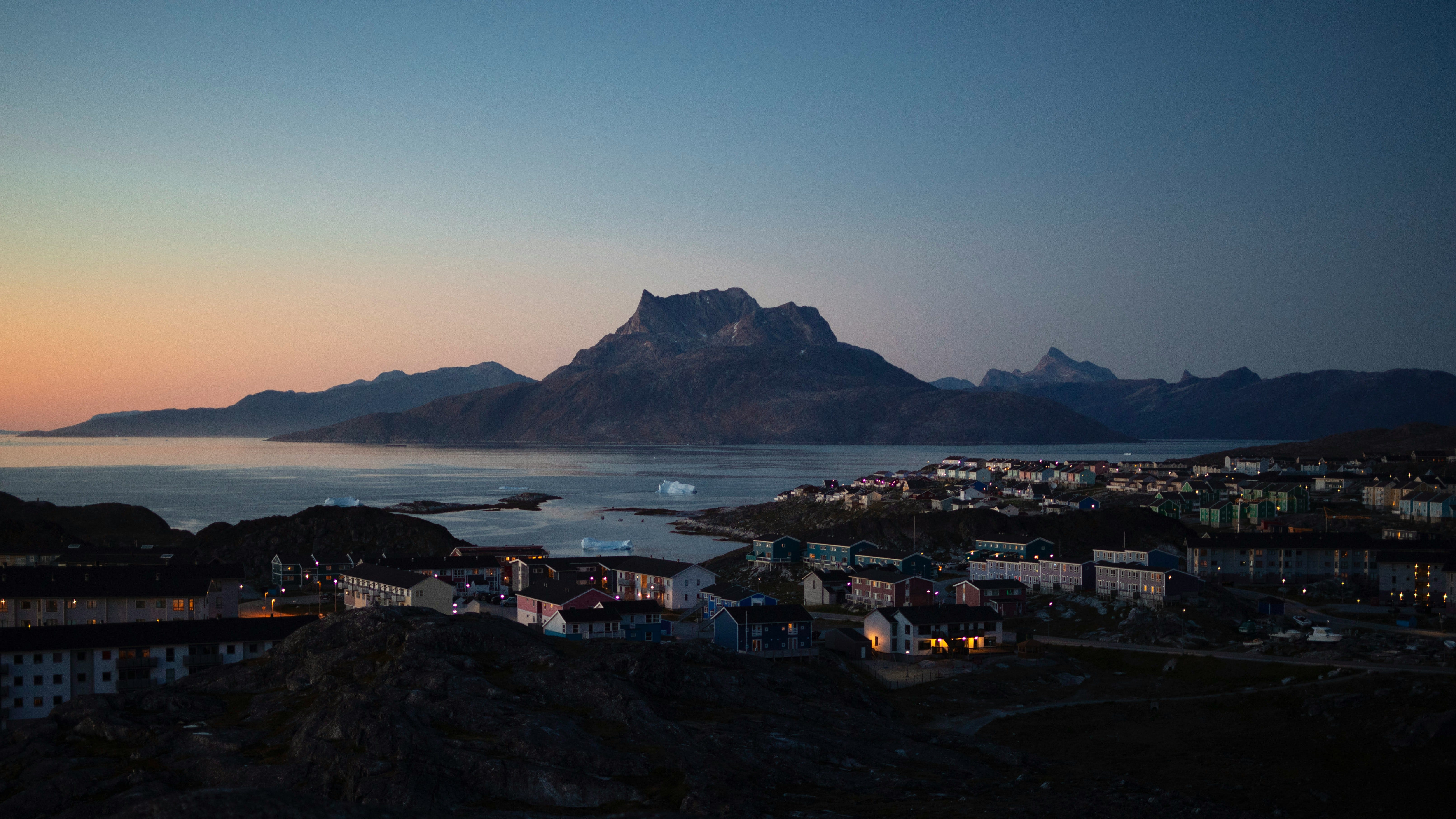
Greenland is a semi-autonomous territory that is part of Denmark - a NATO ally. The Arctic island has been politically and culturally associated with Norway and Denmark for more than a thousand years.
Trump aide Stephen Miller this month claimed that the island rightfully belongs to the United States and continuously claimed that America could just seize the island if it wanted.
“Nobody’s going to fight the United States militarily over the future of Greenland,” Mr. Miller told Jake Tapper, the CNN host, after being asked repeatedly whether he would rule out using military force.
[…]
“We live in a world, in the real world, Jake, that is governed by strength, that is governed by force, that is governed by power,” he said. “These are the iron laws of the world since the beginning of time.”
He seems nice. /sarc
When was the United States established, again?
Trump has claimed that his desire to control Greenland is a response to Russia’s and China’s increased presence in the Arctic. Russia has been rebuilding its old Soviet-era bases and opening new ones in the Arctic, and Russian submarines frequently operate in the North Atlantic.
China has also increased its activities in the region.
In 2018, China declared itself a "near-Arctic state" in an effort to gain more influence in the region. China has also announced plans to build a "Polar Silk Road" as part of its global Belt and Road Initiative, which has created economic links with countries around the world.
However, claims of imminent Chinese and Russian aggression against Greenland are dubious at best. Trump has been asserting that Russian and Chinese forces are lurking off the coast of Greenland ready to strike.
“That statement makes no sense in terms of facts,” said Andreas Østhagen, research director for Arctic and ocean politics at the Fridtjof Nansen Institute in Oslo, Norway. “There are no Russian and Chinese ships all over the place around Greenland. Russia and/or China has no capacity to occupy Greenland or to take control over Greenland.”
“The only Chinese I see is when I go to the fast food market,” Lars Vintner, a heating engineer told The Associated Press in Greenland’s capital Nuuk. He said he frequently goes sailing and hunting and has never seen Russian or Chinese ships. Another Greenlander, Hans Nørgaard, told AP that Trump’s claims are “fantasy.”
Lin Mortensgaard, an expert on the international politics of the Arctic at the Danish Institute for International Studies, said that while there are probably Russian submarines — as there are across the vast Arctic region — near Greenland, there are no surface vessels.
I asked Google whether Russia even bothered with Greenland before Trump started discussing it in 2024. The AI suggested that prior to 2024, Russia had been monitoring the region as part of its Arctic strategy, but that there have been no direct threats to the island from the Russians.
But all of a sudden…
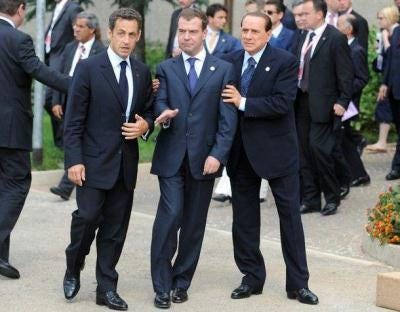
The drunken, aggressive lout Russian Security Council Deputy Chairman Dmitry Medvedev a few days ago said that Greenlanders could vote to join Russia if the United States doesn’t hurry to secure the Arctic island.
“According to unverified information, in a few days there could be a sudden referendum, at which the entire 55,000-strong Greenland could vote to join Russia."
So Medvedev is working to goad Trump into aggression against Greenland, while at the same time, the Kremlin says the island belongs to Denmark. (I’ll wait while you laugh at the tone-deaf nature of that statement from a country that has been waging full-scale war for four years to capture Ukrainian territory.)
Trump’s threats against Greenland are also giving Russia an opportunity to condemn the US president’s bullying of a NATO ally, even as Medvedev instigates aggression between the United States and the rest of the alliance. Kremlin spokescreature Dmitry Peskov highlighted that Trump doesn’t really care about international law and has been sabre-rattling about Greenland for a year, claiming that the United States will get Greenland “one way or the other.”
“On the other hand, given that President Trump is in Washington ... he himself has said that international law is not a priority for him,” Peskov added.
So why is Russia all of a sudden commenting on Greenland and trying to goad Trump into action?
On one hand, Russia is encouraging Trump to get more aggressive with Greenland, and on the other, Moscow is pointing out how Trump doesn’t care to preserve the international order and claiming that Greenland belongs to Denmark.
Active measures against NATO
NATO was created after World War II to protect members against Soviet aggression and expansionism, prevent the revival of nationalist militarism in Europe through a strong North American presence on the continent, and encourage European political integration.
Accordingly, after much discussion and debate, the North Atlantic Treaty was signed on 4 April, 1949. In the Treaty's renowned Article 5, the new Allies agreed "an armed attack against one or more of them… shall be considered an attack against them all" and that following such an attack, each Ally would take "such action as it deems necessary, including the use of armed force" in response.
As I wrote last year, Russia has been engaging in hybrid operations against the West using unconventional warfare to weaken western allies. The multiple arson attacks against NATO countries, the extraterritorial murders on NATO land, and electoral interference are all attacks against NATO nations, but as former NATO official and senior research fellow at the Finnish Institute of International Affairs, Dr. Edward Hunter Christie said, Article 5 needs some updating.
“It’s the old problem of non-military, so-called sub-threshold attacks,” he replied when I asked why Article 5 has not been invoked. NATO is getting a bit better about addressing these attacks, such as the NATO deployment to the Baltic Sea after the sabotage acts against subsea infrastructure.
Unfortunately, however, low-level political subversion, isn’t really considered an attack, and western powers are at a disadvantage there.
So, maybe it’s time to reevaluate the definition of “attack.” These active measures are an absolute threat to NATO.
Medvedev’s barb about Greenlanders voting to become a part of Russia was meant to provoke Trump and make him even more hostile to our NATO partners.
What would happen if one NATO member attacked another?
Both the United States and Denmark are NATO members. NATO’s collective security guarantee was created as a hedge against external threats, but Article 5 does not specify. The chaos would be unprecedented:
Would NATO allies be obligated to respond against the aggressor, regardless of membership status?
Would NATO be forced to go to war with itself?
Danish Prime Minister Mette Frederiksen mentioned recently that an attack by NATO’s biggest, strongest partner against any other ally would mean the end of the alliance.
Who would benefit from the alliance’s demise and its atrophy?
Three guesses, and the first two don’t count.
Yes, I believe Russia is opportunistically engaging in active measures to drive a spike between NATO allies and undermine the organization.
Greenland is important
To be sure, there’s no understating the strategic importance of Greenland. The island is rich in rare-earth minerals, such as neodymium, dysprosium, praseodymium, terbium, and yttrium. These minerals are critical for cell phones, batteries, computers, and electric vehicles, among other things.
In addition, Greenland guards part of what is known as the GIUK (Greenland, Iceland, United Kingdom) Gap, where NATO monitors Russian naval movements in the North Atlantic, and the US Defense Department operates the Pituffik Space Base in northwestern Greenland, which was built after the United States and Denmark signed the Defense of Greenland Treaty in 1951. The base supports missile warning, missile defense, and space surveillance operations for the United States and NATO.
But regardless, if the United States felt that Denmark is not providing sufficient security for NATO or wanted to become further involved, why not just engage diplomatically? Why not request more military access? Denmark has signaled a willingness to allow the United States to expand its military presence in Greenland.
Denmark and Greenland itself have repeatedly stated the island is not for sale. Hold a referendum to see what Greenlanders want, although the odds are against the United States gaining control that way. A poll a year ago indicated that Greenland residents strongly reject the idea of US control.
What about a free association deal?
Trump administration officials have reportedly been working on a possible “compact of free association” (COFA) deal similar to the arrangement the United States has with a number of small South Pacific nations, including the Marshall Islands.
Under such a compact, the smaller country retains its independence and is guaranteed Washington’s protection and a potentially lucrative duty-free trade deal, while the US military gets to operate more or less without restriction in a strategically important territory.
So why antagonize allies? Why threaten tariffs and military action?
By tearing at the very fabric of NATO, Trump is giving the Russians exactly what they want: a weakened alliance which will be incapable of acting as Russia continues its military and non-conventional attacks.
Excellent points on the dynamic between NATO and Russia.
A piece that digs into the importance of GIUK:
https://www.theangrydogs.com/p/the-betrayal-of-ukraine-peace-power