
Are We Living in a Fascist State?
TLDR: no

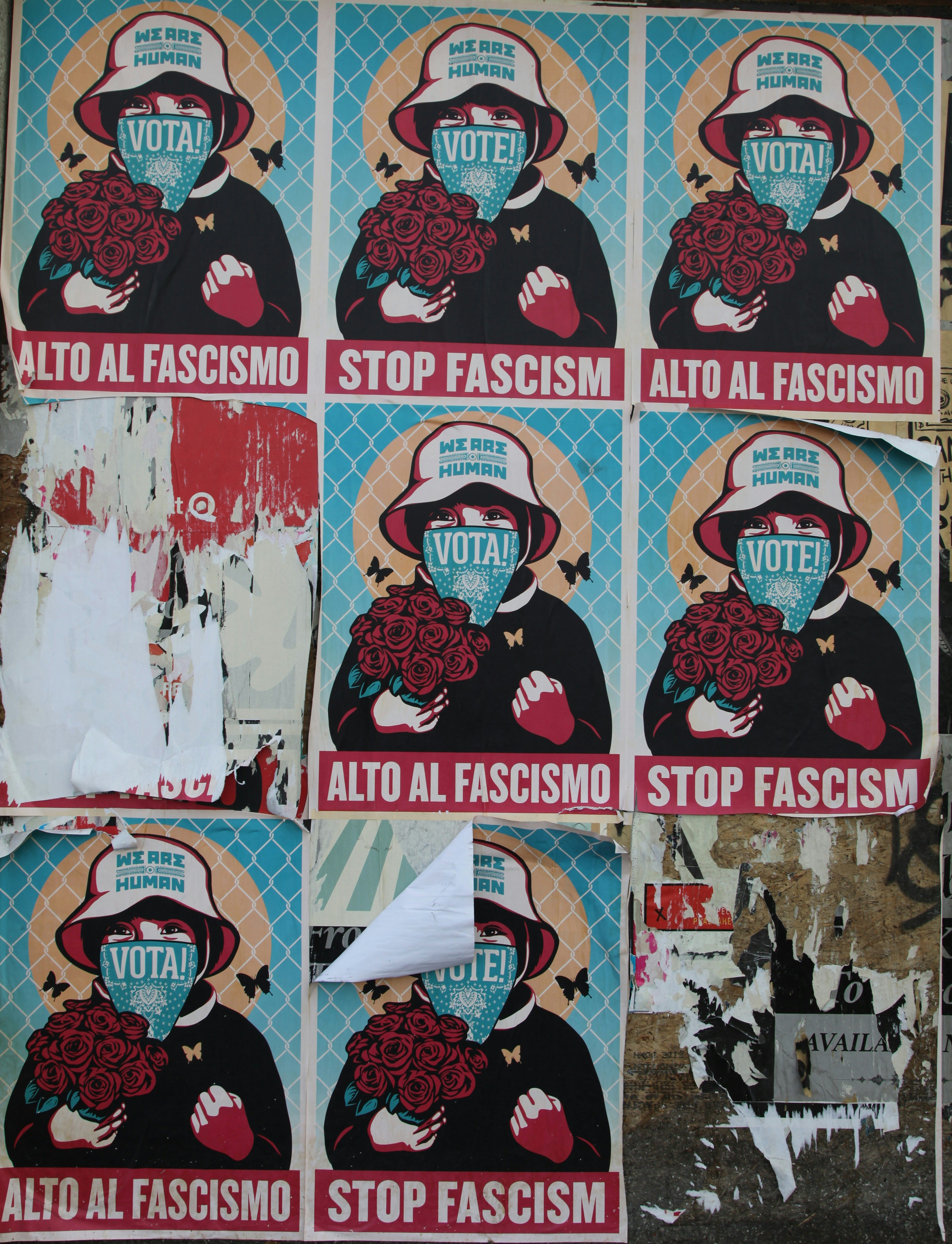
I know numerous readers will read the subtitle and become angry, refusing to read the rest of the article because they’re infuriated at the events taking place in our country during the past year, but the essay needs to be written.
I’m seeing a lot of (justified) outrage and (exaggerated) claims—especially after the killings of Renee Good and Alex Pretti by what many refer to as “ICE gestapo” last month—that America has become a fascist nation. The anger is warranted, but I will submit “fascism” is hyperbole, as witnessed by the fact that I can still write this newsletter, that social media is alight with criticism of the current administration, and courts continue to act as a check on executive power.
Does this mean I in any way approve of what’s going on in America?
Absolutely not.
But we need to get some perspective, so in this short article I hope to do just that.
The indicators.
In October, the Steady State—an organization of former US national security professionals—from the intelligence community, defense, diplomacy, and homeland security—created to promote democracy, the rule of law, and a secure America—published a must-read assessment: Accelerating Authoritarian Dynamics: Assessment of Democratic Decline.
The assessment was created to mirror the analyses the Intelligence Community publishes regularly, applying rigorous analytic tradecraft to conditions inside the United States. No, the assessment did not judge that we live in an authoritarian or fascist regime. It did conclude, however—with moderate to high confidence—that the nation is on a trajectory toward competitive authoritarianism: a system in which elections, courts, and other democratic institutions persist in form but are systematically manipulated to entrench executive control.
This does not mean that we live in a fascist regime, despite the hype.
Are there danger signs? Absolutely!
As the Steady State wrote in October, observable indicators across executive actions, judicial rulings, legislative behavior, electoral administration, media/civil society conditions, security/intelligence politicization, public trust/delegitimization narratives, and longitudinal expert indices do indicate we are sliding.
1 - We assess with high confidence that democratic backsliding in the United States is accelerating, characterized by a consolidation of executive power, erosion of institutional checks and balances, and deliberate weakening of civil service protections and oversight mechanisms.
2 - We judge with high confidence that the Executive Branch is actively weaponizing state institutions to punish perceived opponents and shield allies. This includes the politicization of the Department of Justice and intelligence agencies, the weakening of oversight and independent institutions—including the dismissal of Inspectors General—and the politicization of the civil service, including the revival of measures such as “Schedule F,” which undermines the neutrality of the federal workforce.
3 - We assess with moderate confidence that judicial independence is under sustained threat. Partisan-driven appointments have partially reshaped the courts along ideological lines, narrowing space for impartial adjudication. At the same time, increasing reliance on the Supreme Court’s “shadow docket” enables controversial executive actions to be approved without full argument or explanation. The cumulative effect is a judiciary increasingly perceived as partisan and aligned with executive interests.
4 - We judge with moderate confidence that legislative weakness is compounding the authoritarian trend. Congress’s delegation of core lawmaking functions, combined with partisan obstruction and procedural manipulation, has diminished its ability to provide an effective check on executive power.
5 - We assess with high confidence that public trust in U.S. democratic institutions is declining, fueled by repeated contrived assaults on electoral integrity lacking evidence, attacks on the press, and efforts to delegitimize dissent. This trend risks producing growing tolerance among segments of the public for authoritarian governance.
6 - We judge with moderate to high confidence that the cumulative effect of these dynamics places the United States on a trajectory toward “competitive authoritarianism.” While formal democratic institutions such as elections and courts remain in place, the playing field is being systematically tilted to favor incumbents, raising risks for both domestic stability and U.S. global credibility.
Please note that the assessment talks about authoritarian trends and a trajectory toward authoritarianism. It does not judge with ANY amount of confidence that we live in a fascist state.
I will also say, for full transparency, that I know many of the people at the Steady State personally. They’re former colleagues, they’re experts in their field, they’re Republican, Democrat, Libertarian—they span an entire spectrum of political views.
None of them are hysterical or so blinded by ideology, that they frantically scream about fascism and pack their bags to abandon the United States.
But they are urging caution.
This does not happen in a fascist regime.
In a fascist regime, the media would be silenced, and while the Trump administration continues to sue, extort settlements, throw tantrums at the media, and demand resignations and firings, media outlets—both print and broadcast—continue to publish and run stories critical of the administration.
In a fascist regime, a court would never have ordered an unqualified, partisan hack tossed out of her Justice Department slot and posted a vacancy to replace her.
In a fascist regime, courts would not rule against the federal government in summary judgements or permanent injunctions.
In a fascist regime, social media would be silenced by the government. And although, some of the oligarchs (I said what I said) who run the biggest media platforms are trying to throttle certain posts, there are ways to tweak the algorithm and curate your feed to limit (or expand) what you see and read.
I haven’t seen anyone arrested for posting negative stories about Trump, as they are in, say… Russia or Belarus.
As former ICREA Research Professor of Philosophy at the Pompeu Fabra University Santiago Zabala and former La Stampa foreign desk editor and London correspondent Claudio Gallo wrote at Al Jazeera last May, Trump is not a fascist, but more of a “hypercapitalist,” who wants to dismantle democracy to free capitalism from constraints.
“Fascist movements varied in their approaches to political and economic issues,” they write, “but they have had several elements in common: The good of the nation is elevated above all, and the state plays an overarching role in society and the economy.”
OK, so that sounds like that is exactly what is going on. But wait…
“Trump may be using the language of ‘America first’ in his rhetoric, but he is not really pursuing the ‘good of the nation,’” wrote Zabala and Gallo. They claim he only values the interests of the ultra wealthy.
So although Trump may claim “America First,” his actions speak otherwise.
In a fascist regime, Congress wouldn’t push for impeachment of the DHS Secretary, regardless of how venal, dishonest, and incompetent she is. Even attempts to do so would be quashed by a fascist regime.
In a fascist regime, the killing of a disarmed individual exercising his constitutionally protected rights would not be investigated (not making an assessment about what kind of investigation and whether anything will change because of it).
In a fascist regime, neither this article nor the assessment by the Steady State would have been published.
All this said…
As I’ve written previously, this is barely the country to which my family and I immigrated in 1980.
Watching masked ICE officers beat up and kill US civilians for exercising their rights is not the country I signed up to defend.
Watching a president throw hissy fits and threaten economic warfare because he can’t steal a chunk of land in the Arctic that doesn’t belong to him is insane.

Criminalizing dissent via Executive Order when there’s no “domestic terrorism” designation to create justification for arresting opposing voices is morally abhorrent.
Corruption, including kickbacks for access from foreign governments and kleptocrats and exploitation of virtual assets to enrich the family, is another red flag indicating an authoritarian slide.
Trying to penalize former military officers for doing little more than telling current members of the military that they have the duty to disobey illegal orders—something that is literally stated in the Uniform Code of Military Justice (Article 92) is foul.
I won’t list everything here. We’ll be here all day.
I just want to remind you, gentle reader, that it’s up to every American to stop this slide.
What does it tell you when Congress is too cowardly to stand up to abuses, and still enjoys a more than 90 percent re-election rate?
What about the Senate? US Senate reelection rates have been near or above 80 percent every single election cycle during the past 20 years!
This, despite absolutely abysmal approval ratings.
Sure, there’s pending legislation to mitigate the authoritarian slide, including a bill to ban law enforcement officers and ICE agents from wearing face coverings during arrests and require them to provide official identification.
Sure, there is a proposal to reclaim Congress’ trade authority.
But unless Americans become more informed, use critical thinking when examining news reporting, and vote their values, instead of their party affiliation, I may be writing a very different article soon (or maybe not).
Oh, please…
"...competitive authoritarianism: a system in which elections, courts, and other democratic institutions persist in form but are systematically manipulated to entrench executive control." So, if this goes on, we could freakin turn into FRANCE??? Ewwwww....