
The Berlin Wall, Soccer Fans, and America
Visiting an exhibit about the Berlin Wall while soccer fans swarmed my city reignited my appreciation for America

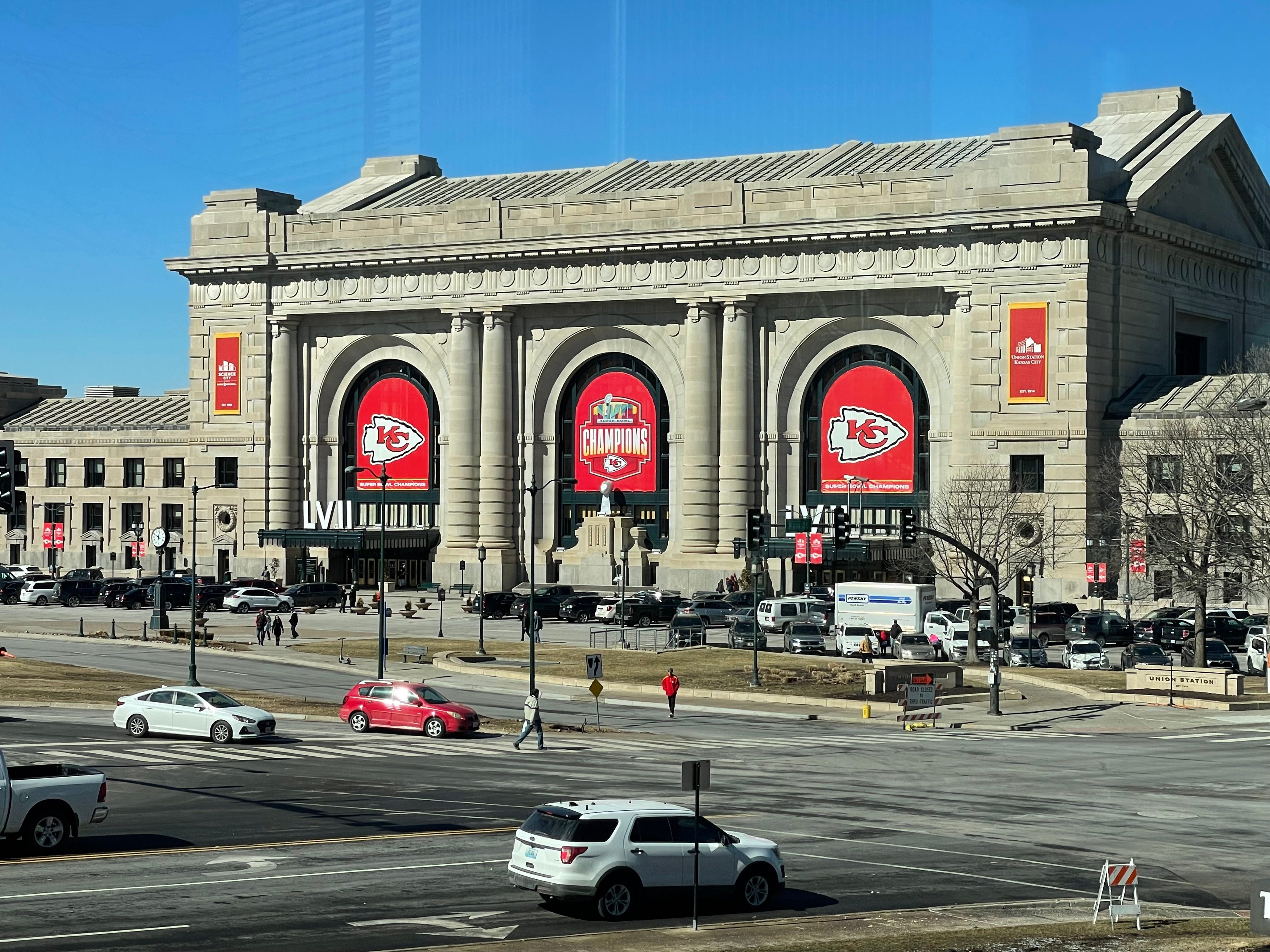
I live in the Kansas City metro — aka “Flyover Country” to some. It’s a city best recognized by most of the country as the home of the Kansas City Chiefs, love ‘em or hate ‘em. Otherwise it’s a midsized city without a lot of glitz.
But the town does boast some remarkable places, including Union Station, a once-abandoned train depot restored to its original grandeur 30 years ago. Union Station regularly hosts exhibits of historical and cultural significance, which my husband and I often attend.
Recently we took in a retrospective called “The Berlin Wall/A World Divided.” As Boomers, we remember the Cold War, the threat of the USSR, and that glorious day in 1989 when the wall fell, which was something that we never, ever expected to see in our lifetimes.
The amount of information and artifacts went beyond our expectations.
What We Saw
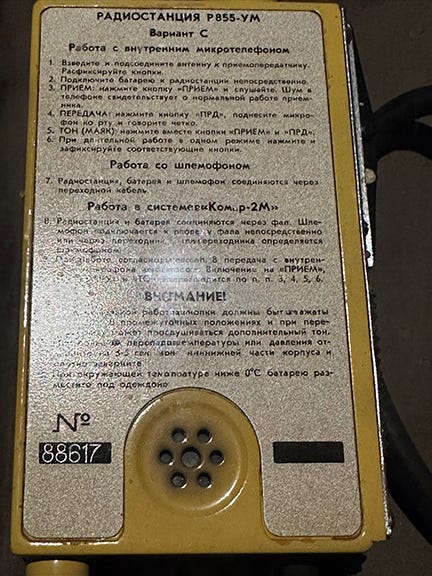
The exhibit started with some Cold War history of the tension between the Soviet Union and the West. It featured artifacts such as an emergency survival kit for downed Russian MiG pilots, which includes a radio telephone inside their helmets.
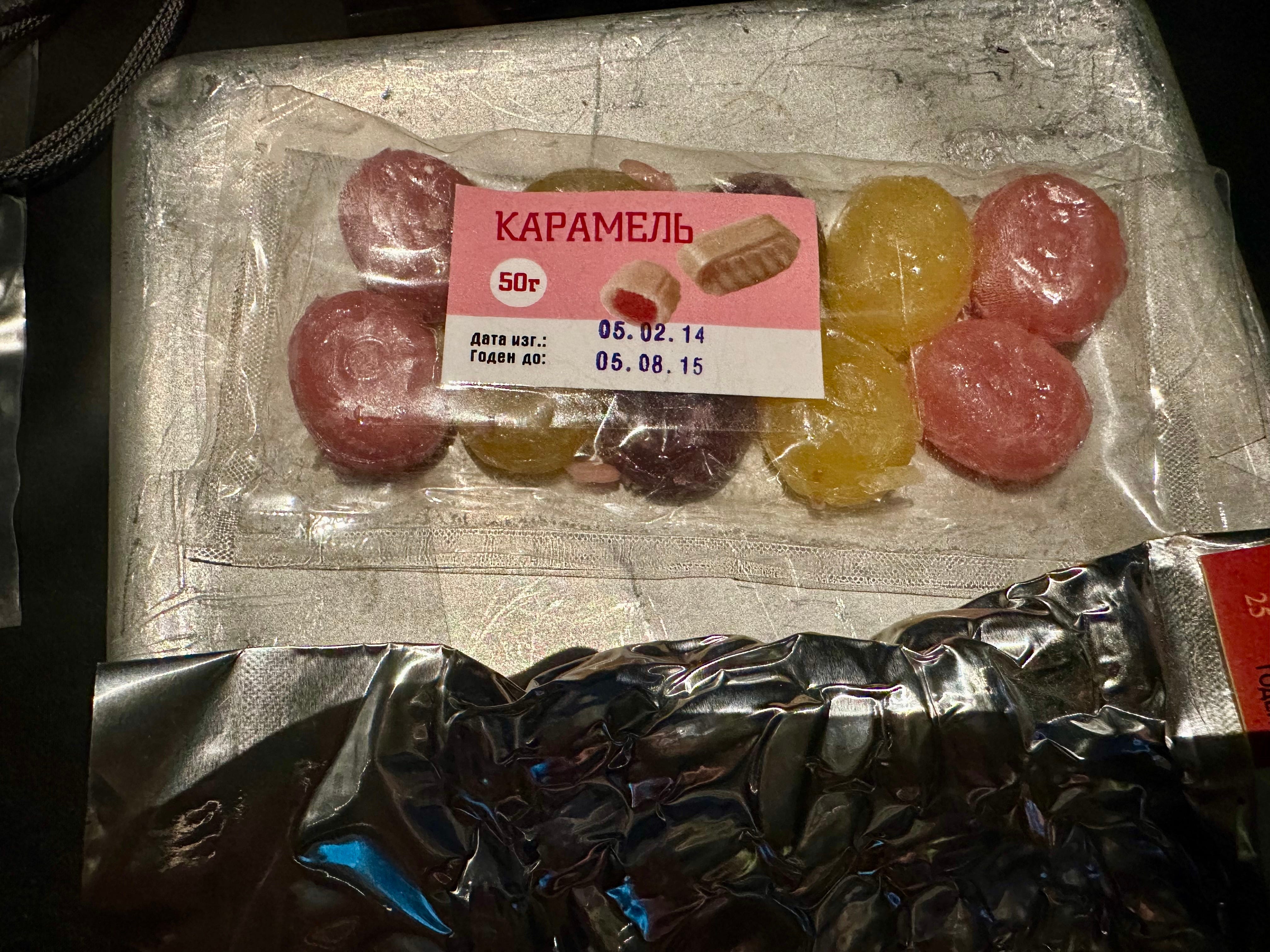
Emergency food supplies would include these “caramels,” which Nicki (who is fluent in Russian and grew up in the USSR) assures me are merely sugar candies called ledenetz with nasty “jelly” filling inside.
There was Soviet propaganda displayed, like this poster of the opening of a new Russian school, contrasting it to an image of a derelict American school which had closed. The text falsely claimed that 74% of US public spending went to the military, and only 1% went to public schools. The Soviets asserted here that as a result, 10 million US citizens were illiterate.
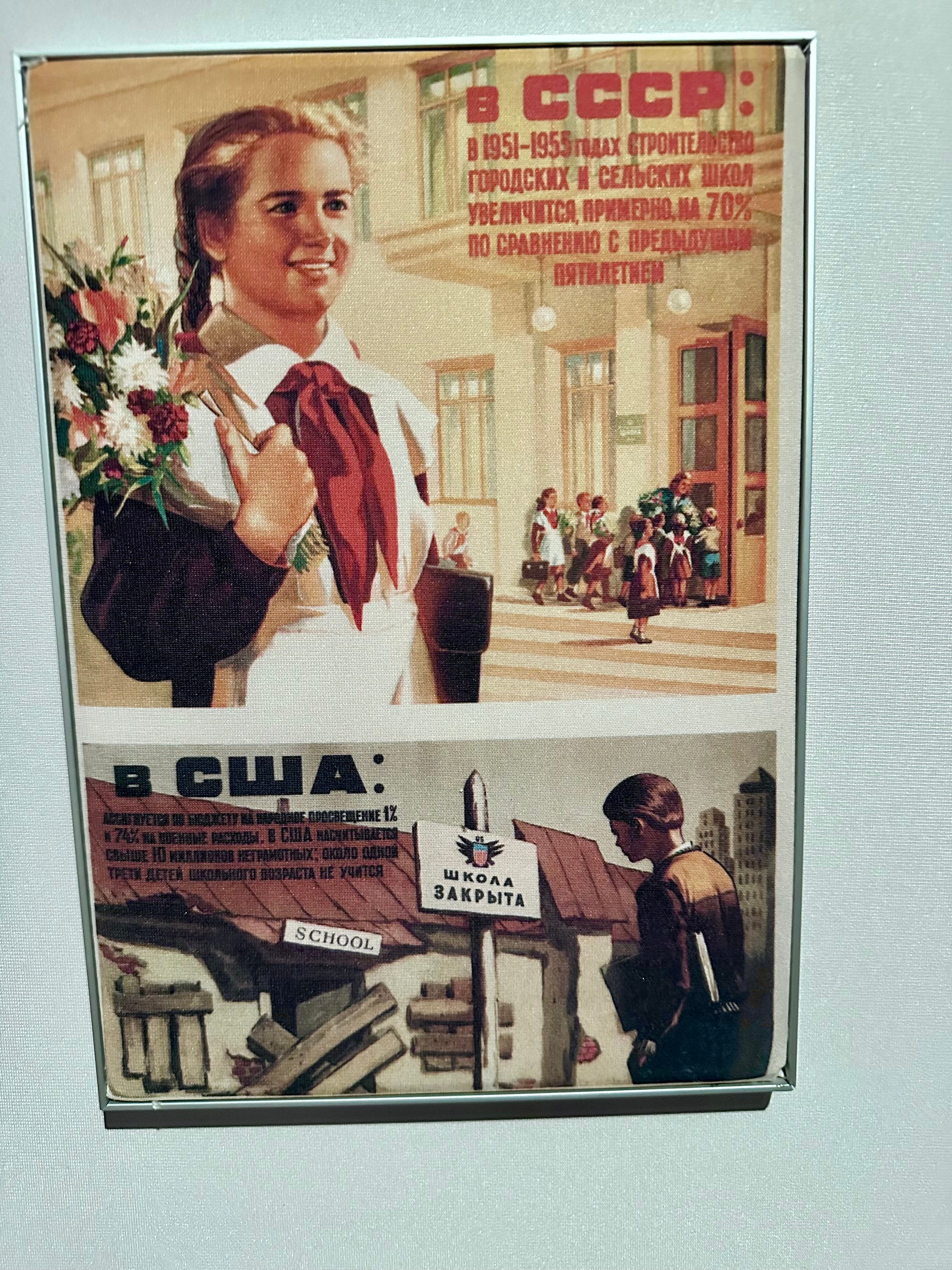
These are just a few examples of the tensions between the Soviet Union and the capitalist West which eventually led to the construction of the infamous Berlin Wall in 1961.
Captivity for West Berliners
In Ernest Hemingway’s novel The Sun Also Rises, one of the characters is asked how he went bankrupt. “Two ways,” said the man. “gradually, and then suddenly.”
One could say a similar thing happened to East Berliners in 1961. They were once relatively free to come and go between the Soviet and Allied sectors in Berlin. Then, as increasing numbers of East Berliners fled to the Allied sectors, the Soviets started to build the notorious wall, trapping them within the sector’s boundaries, unable to travel outside their part of the city.
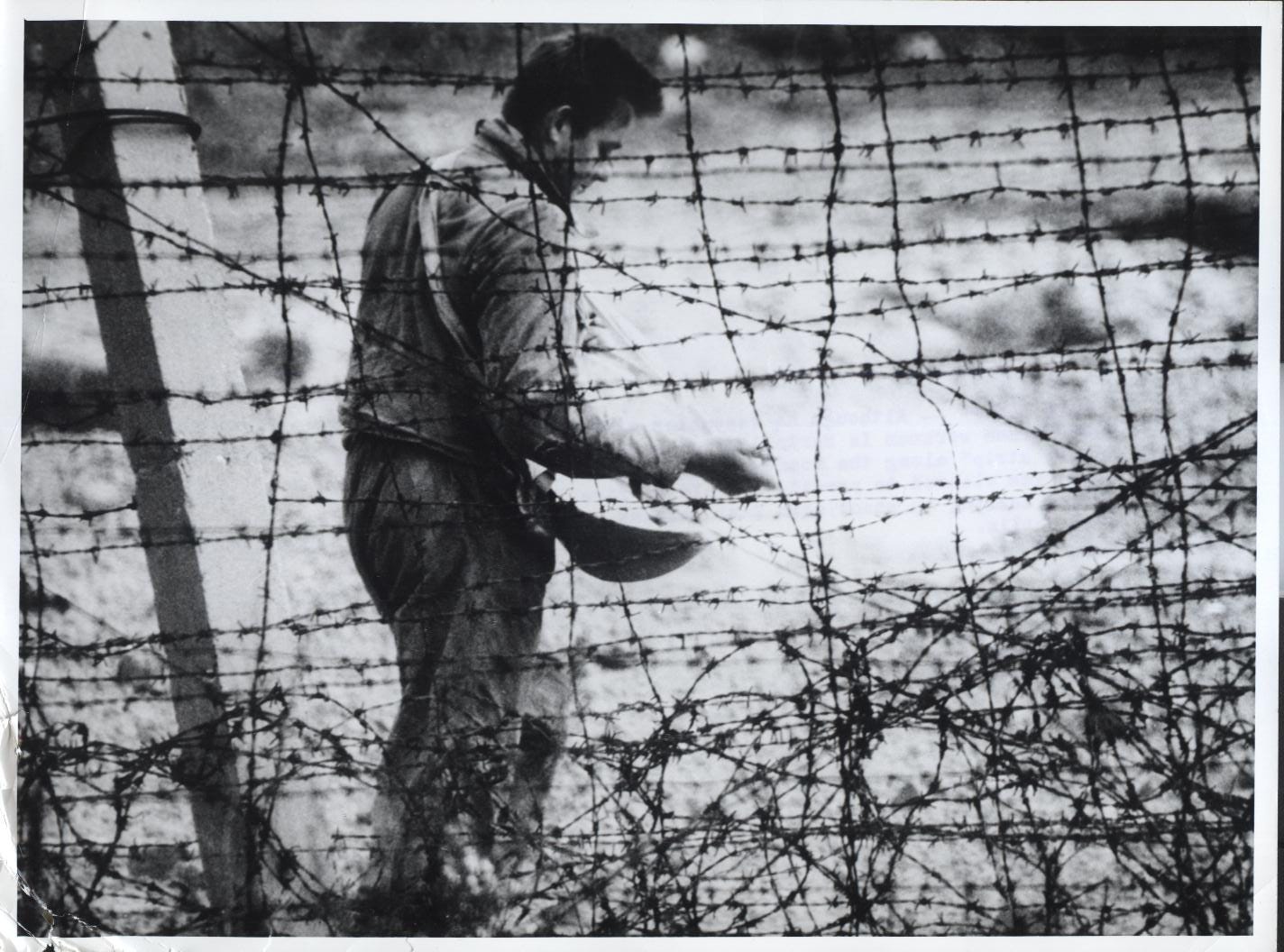
First came the barbed wire on August 13, 1961, on what became known as “Barbed Wire Sunday.”

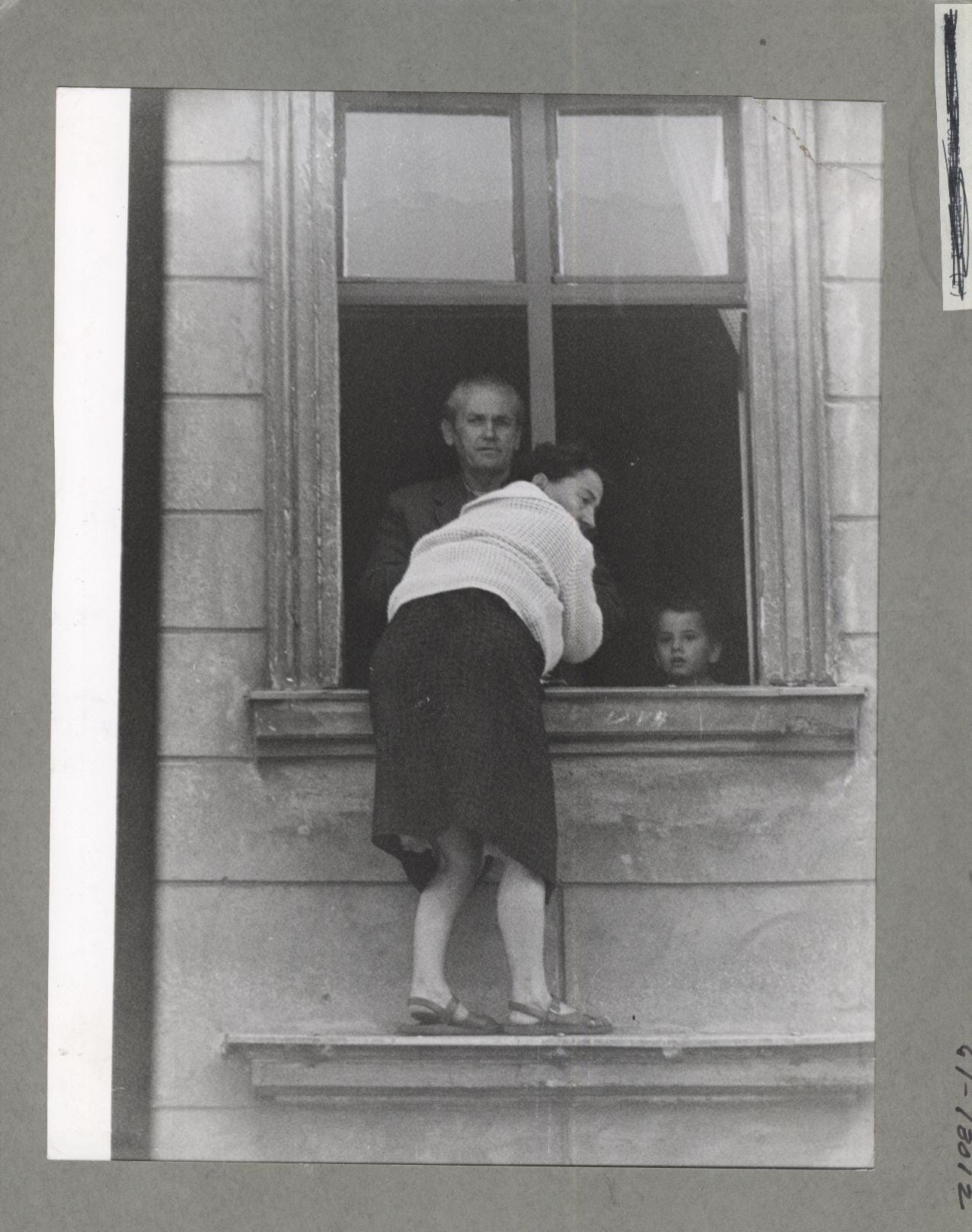
But East Berliners were already escaping to West Berlin. A woman named Margarethe Finder and her family lived in an apartment right at the sector border. Like many Berliners they knew that the Soviets were cordoning off the city, so the three jumped from their fourth-story window into a net below held by firemen on the West Berlin side.
In this photo, Margarethe readies herself to jump while her husband watches from the window, waiting his turn, and for the time when their little boy would make his jump.

The first concrete blocks for the Berlin Wall were placed on August 17. It took four years—until 1965—for the initial iteration of the wall to be completed. The wall eventually covered 96 miles, although only 27 of them were within the city itself. The remainder separated the countryside around East Berlin from West Berlin.
But the wall did not deter courageous Germans from seeking their freedom.
Escape to the West, Despite the Dangers
Germans have a reputation for being an innovative people, and their resourcefulness flourished as East Berliners sought to gain freedom.
Here a man and his friends thwarted guards in a cemetery in order to pull off an escape over the wall.
And if they couldn’t go over — well, they might escape through tunnels under the wall, even taking their children. (Audio unavailable)
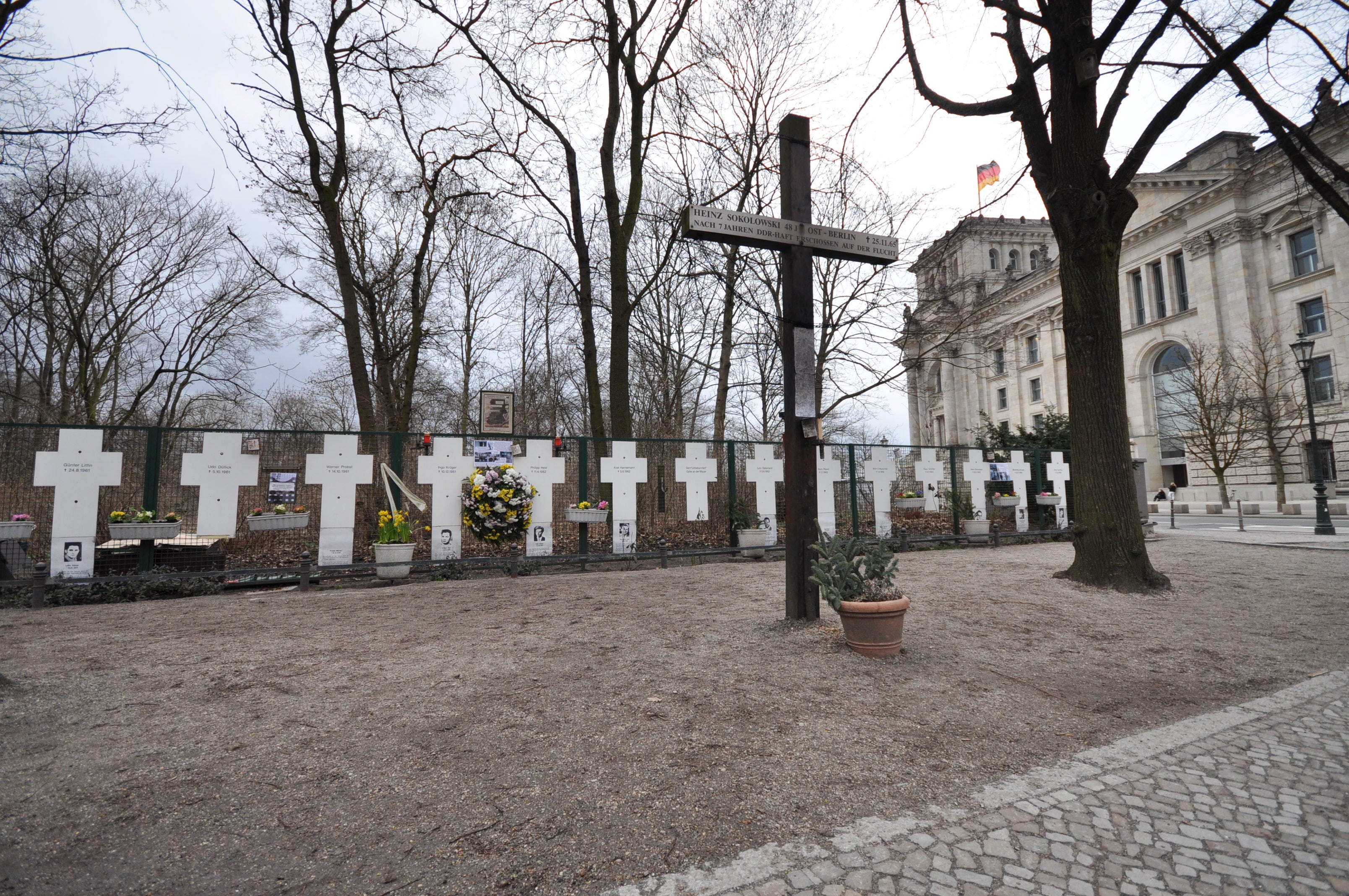
Sadly, however, not every bolt for freedom was successful and numerous attempts resulted in deaths, as this memorial to the victims of the Berlin Wall symbolizes.
The End of the Wall
The imprisonment of the Germans on the east side of the Berlin Wall came to a quick end on November 9, 1989, after an official made an error during a press conference.
You cannot make this stuff up, but yes, it happened.
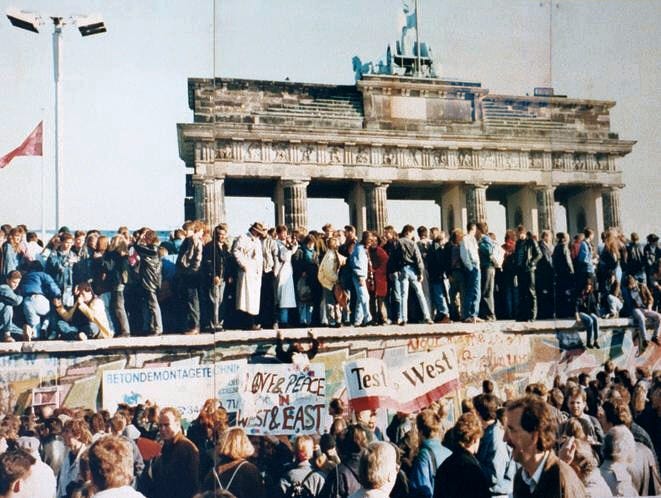
It didn’t take long for Germans on both sides to swarm the borders, and gleefully take hammers to the hated wall.
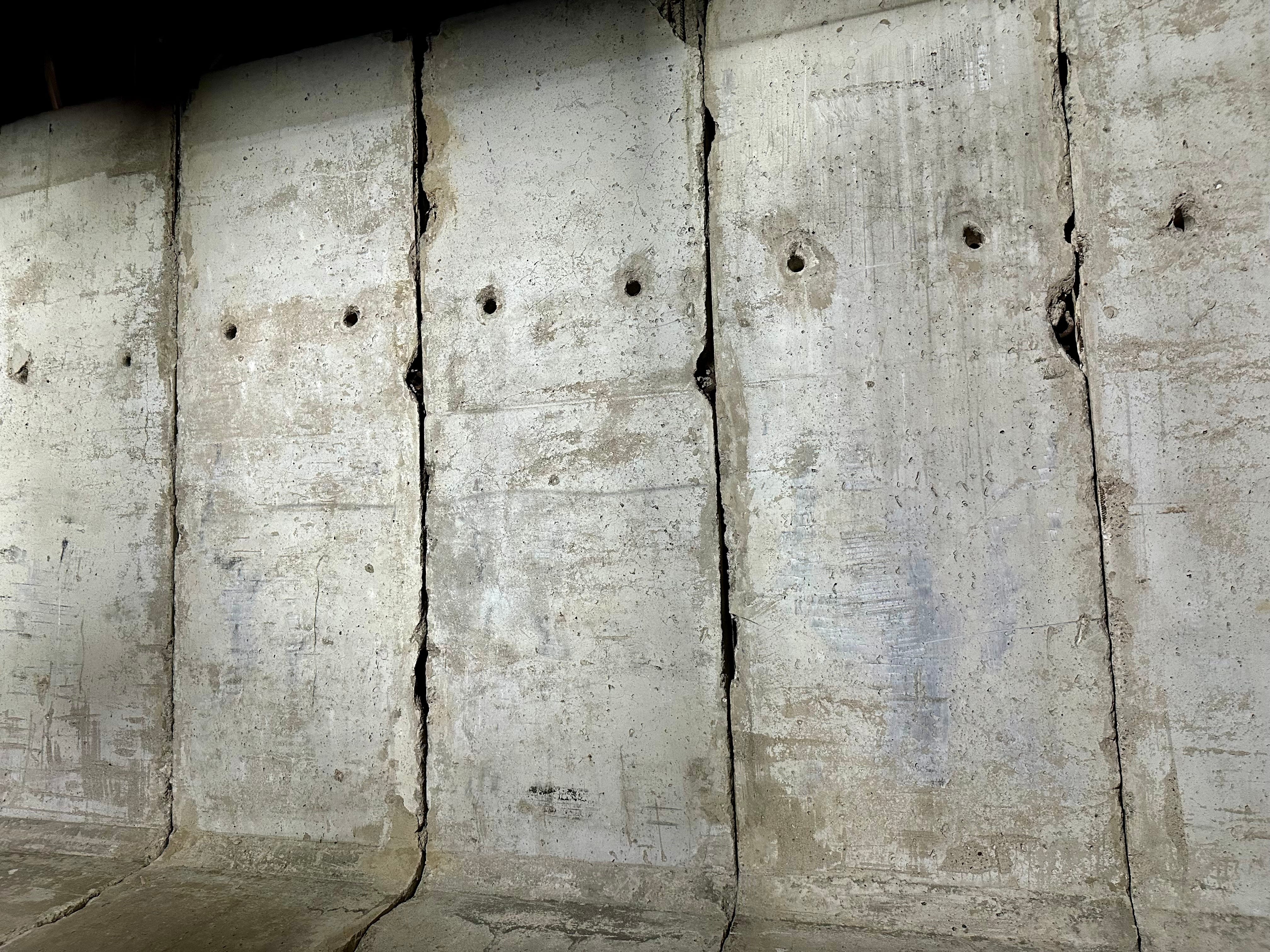
The conclusion of the exhibit displayed panels of the Berlin Wall. Here is how the wall appeared to East Berliners: stark, unforgiving, and brutalist, like the Soviet government.
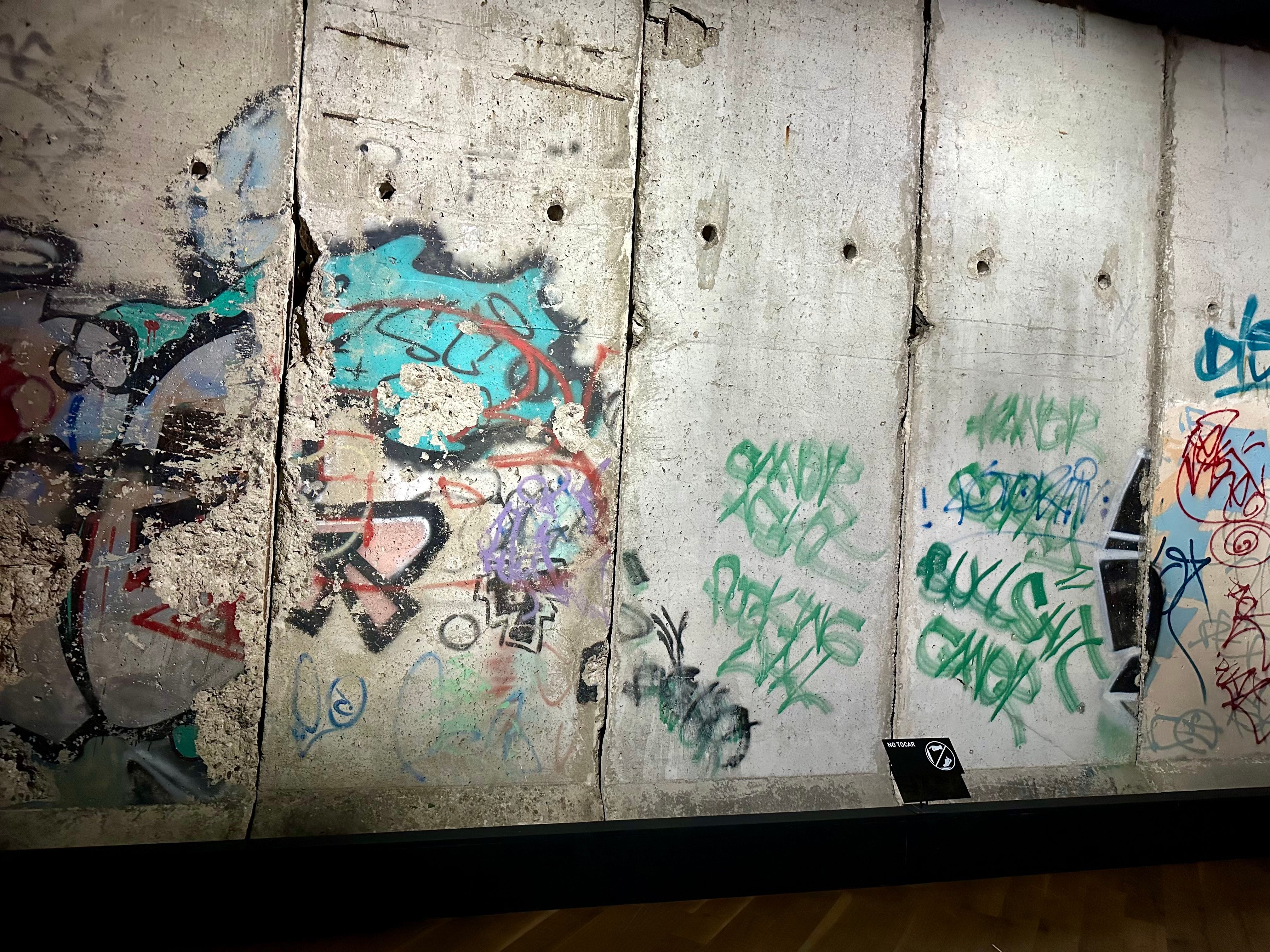
And here is how it looked on the opposite side, where West Berliners were allowed to exercise free expression on the despised wall.
Also featured were multiple videos of the celebrations that Germans of both East and West held together for the first time in nearly 30 years. I have to admit it was an emotional—and somewhat personal—moment for me. My late mother had extended family members—ethnic Germans from Eastern Europe—who escaped the Soviet army at the end of World War II. One cousin came to America and became a citizen, living her best life in a Chicago suburb.
The Soccer Fans from The Netherlands
After we completed our visit to the Berlin Wall exhibit, my husband and I stopped at a coffee shop in the main hall of Union Station. The hall was packed with people—more than I have ever seen, even at Christmas—and many of them were wearing orange soccer jerseys. They were focused on large screens suspended from the ceiling that were broadcasting the World Cup soccer match that was playing at that time.
Kansas City is one of the host cities for the World Cup games this summer. The fans in the orange jerseys were from the Netherlands, and the day after our visit to Union Station they took over downtown. That was an extraordinary event for the city.
As for Americans: who hasn’t been gladdened by the expressions of wonder that European soccer fans have shown for the country’s bounty and openness? Even for something as mundane as ranch dressing?
Europeans’ love affair for America seems to be rubbing off on Americans themselves. Prior to the US vs. Bosnia and Herzegovina match, a crowd of thousands gathered at a watch party in the Power & Light entertainment district of Kansas City. Watch how this crowd of mainly young adults enthusiastically belted out the National Anthem. (Yes, they sang “home of the Chiefs” at the end. Don't ask. It’s been a Thing here for a long time.)
Thoughts on the Wall, the World Cup fans, and America
I left the Berlin Wall exhibit with feelings of awe for the courage of the East Berliners who risked their very lives for the chance to enjoy freedom. Their stories also left me with greater appreciation for my liberties as an American—not by favor or through benevolence of government—but simply because I exist.
I also marvel at the soccer fans, including the Dutch fans who came to my city, who have reveled in the vast beauty of America and the warmth of our people. They recognize how great our country is, despite negative reports in the media and the braying of political naysayers. I’m also ecstatic about the patriotic passion that regular Americans are displaying at the 250th anniversary of our founding.
Freedom. Liberty. Opportunity. These are the reasons why people have flocked to the United States over the past two and a half centuries. And despite our warts and foibles, the United States still remains the best damn nation ever.